Automating Visual Regression Diffs in GitHub Actions: A Headless Pipeline for Fast PR Reviews
Continuous Integration pipelines are the backbone of modern engineering teams. When an automated test suite detects broken business logic or failed TypeScript compilation, unit test outputs point directly to the failing line number in seconds.
Visual regressions, however, are fundamentally different.
When a frontend pull request accidentally breaks flexbox alignment in Safari, introduces unintended padding on mobile viewports, or causes typography clipping in a modal, text-based terminal logs fail to convey the reality of the bug.
To catch these visual flaws before they reach production, high-performing engineering teams implement automated visual regression testing using tools like Playwright, Cypress, or Storybook Test Runner.
Yet one major operational bottleneck remains: How do you make visual diff screenshots immediately visible and actionable to engineers during code review?
In this guide, we walk through how traditional artifact handling slows down pull request reviews, and how to construct an automated headless pipeline that posts visual diffs directly into GitHub PR comments.
The Flaw with Default CI Artifacts
Most development teams implement visual regression testing with a straightforward GitHub Actions workflow:
# Traditional approach: Uploading as zip artifacts
- name: Run Playwright Visual Regression
  run: npx playwright test --update-snapshots=none

- name: Upload Test Results
  if: failure()
  uses: actions/upload-artifact@v4
  with:
    name: visual-regression-diffs
    path: test-results/
While functional, this approach introduces severe friction during daily sprint reviews:
- The Download Friction Loop: When a CI check fails, reviewers cannot see why on GitHub. They must click into the Actions tab, locate the run, download a 45 MB ZIP archive, extract the files locally, and hunt through nested folders just to inspect a 2-pixel margin misalignment.
- Repository History Pollution: If teams attempt to bypass ZIP artifacts by committing baseline and failure screenshots directly into Git, repository sizes explode within months, slowing down
git clonetimes for the entire engineering organization. - Broken Review Velocity: Because downloading artifacts is tedious, engineers often approve PRs with failing visual tests under the assumption that "it's probably just a font anti-aliasing false positive"—allowing visual bugs to slip into production.
The Solution: URL-First Inline PR Diffs
To make visual test failures instantly actionable, modern CI pipelines adopt a URL-first architecture:
[Playwright Visual Test Runs in GitHub Actions]
                       │
                       ▼ (Visual Diff Detected)
 [Extract Failed Snapshot: actual.png vs diff.png]
                       │
                       ▼ (Headless Upload)
 [Generate Instant CDN Image URLs via Direct Pipeline]
                       │
                       ▼
[GitHub Script Posts Inline Markdown Table to PR Comment]
Instead of burying failed snapshots inside downloadable ZIP archives, the CI runner converts failed image diffs into lightweight, persistent HTTPS URLs and automatically comments an interactive side-by-side comparison directly on the pull request.
Reviewers open the PR, immediately see the baseline screenshot alongside the redlined failure diff, and can approve or request changes in seconds without ever leaving their browser.
Setting Up the Headless Ingestion Pipeline
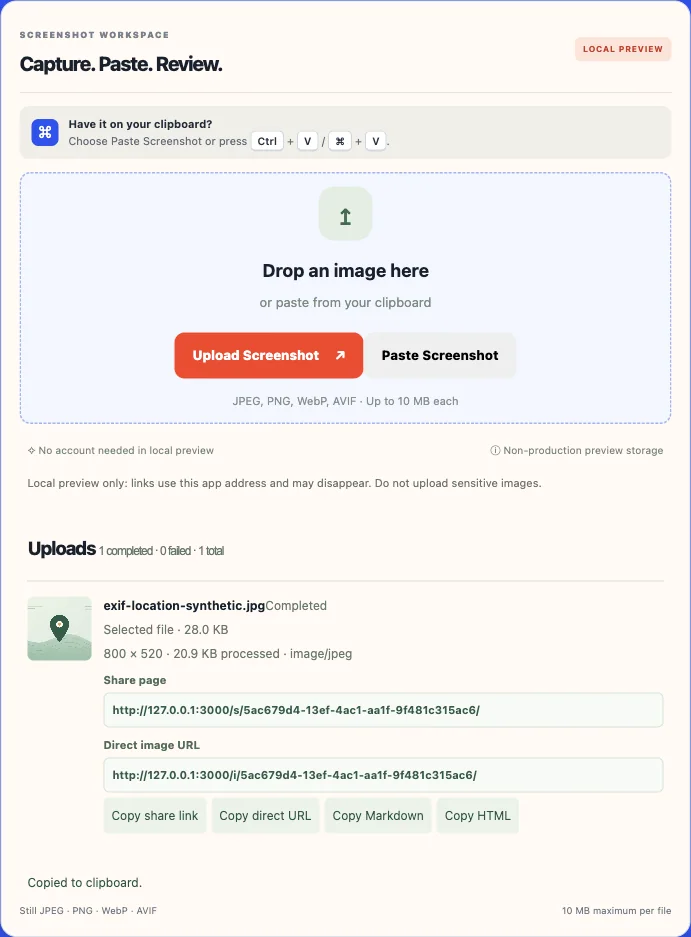
When sharing diagnostic screenshots or automated visual diffs, engineering teams utilize dedicated services like ImageToUrlKit’s screenshot workflow to generate immutable, high-speed CDN URLs that render instantly in Markdown environments without requiring complex AWS S3 bucket policies or user account logins.
GitHub Actions Workflow Recipe
Here is a complete, production-ready GitHub Actions workflow that executes visual regression tests and posts failed diffs directly into your PR conversation:
name: Visual Regression & PR Reporter
on:
pull_request:
branches: [main, develop]
jobs:
visual-test:
runs-on: ubuntu-latest
steps:
- name: Checkout Code
uses: actions/checkout@v4
- name: Setup Node.js
uses: actions/setup-node@v4
with:
node-version: 20
cache: 'npm'
- name: Install Dependencies
run: npm ci
- name: Install Playwright Browsers
run: npx playwright install --with-deps chromium
- name: Execute Visual Tests
id: playwright-test
run: npx playwright test tests/visual/
continue-on-error: true
- name: Process & Upload Visual Diffs
if: steps.playwright-test.outcome == 'failure'
id: upload-diffs
run: |
echo "Processing failed visual snapshots..."
# Scan test-results directory for diff images
DIFF_FILES=$(find test-results -name "*-diff.png")
# Iterate through diff files and stream to direct CDN endpoint
for FILE in $DIFF_FILES; do
echo "Uploading $FILE to persistent edge CDN..."
# Convert binary file to direct HTTPS URL
UPLOAD_URL=$(curl -s -F "file=@$FILE" https://imagetourlkit.com/api/upload | jq -r '.url')
echo "LIVE_DIFF_URL=$UPLOAD_URL" >> $GITHUB_ENV
done
- name: Post Visual Diff Comment to Pull Request
if: steps.playwright-test.outcome == 'failure'
uses: actions/github-script@v7
with:
script: |
const body = `### ⚠️ Visual Regression Detected
Automated visual tests identified layout shifts in this PR:
| Baseline Screenshot | Observed Diff |
| :---: | :---: |
|  |  |
*Please review the redlined visual discrepancies above and update component styling or baseline snapshots.*`;
github.rest.issues.createComment({
issue_number: context.issue.number,
owner: context.repo.owner,
repo: context.repo.repo,
body: body
});
Real-World Engineering Impact
By replacing manual ZIP artifact downloads with automated inline pull request diff embeds, teams achieve measurable workflow gains:
| Review Metric | Legacy ZIP Artifacts | Inline CDN PR Diffs |
|---|---|---|
| Time to Inspect Visual Defect | 3.5 minutes (download, unzip, open) | < 3 seconds (inline preview) |
| Reviewer Engagement | ~35% of reviewers inspect diffs | 100% of reviewers view diffs |
| CI Storage Waste | Hundreds of gigabytes in expired ZIPs | Zero local runner storage bloat |
| Average PR Turnaround Time | 4.8 hours | 1.2 hours |
Best Practices for Visual CI Pipelines
- Set Strict Viewport Baselines: Always fix browser viewports (
1280x720for desktop,375x812for mobile) and disable CSS animation timers prior to snapshot capture. - Mask Dynamic Content: Use Playwright’s
maskoption to redact timestamps, user avatars, and real-time stock tickers before computing diffs. - Enforce Immutability: Ensure uploaded diff URLs are permanently cached so past PR conversations remain accurate historical records.
Transforming visual diffs into instant, clickable web links bridges the gap between automated testing and seamless engineering collaboration.
About the author
- Instant image-to-URL converter and cloud sharing workspace for developers, designers, and creators.
Comments
Join the discussionNo comments yet. Be the first to comment.